
Engineering Audio Briefing
Narrated by RnD Engineering Lab • 5 min
Why SEO-Friendly Websites Are Becoming a Necessity
A website is often the first interaction customers have with your business. Learn how SEO-friendly websites improve visibility, deliver superior user experiences, and drive sustainable qualified leads.
“Building a beautiful website without technical SEO is like printing brochures and storing them in a vault. Search-friendly architecture must be baked into the foundation from day one.”
RnD Engineering & SEO TeamVerified Lead
Technical SEO Architect
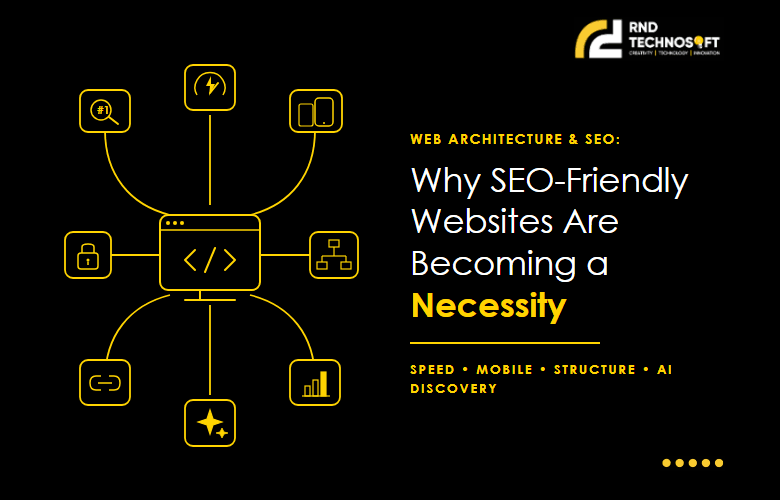
A website is often the first interaction customers have with a business. If potential customers cannot find your website through search engines, your online presence may generate little value.
This is why SEO friendly websites have become an absolute necessity rather than an optional add-on. Businesses across industries—including manufacturers, distributors, engineers, B2B companies, service providers, and e-commerce brands—are investing in website SEO optimization to improve visibility, attract qualified traffic, and increase conversions.
Search engines continue to prioritize websites that provide excellent user experiences, fast loading speeds, mobile responsiveness, structured content, and technical optimization. As a result, organizations that embrace SEO website development gain a significant, lasting competitive advantage.
In this article, we explore why SEO-friendly websites are becoming essential, how they work, their core business benefits, and the best practices businesses should follow to dominate modern search environments.
What Are SEO Friendly Websites?
An SEO friendly website is designed and developed to help search engines easily crawl, understand, index, and rank its content while delivering an exceptional user experience.
These websites follow technical SEO, content optimization, and usability best practices that systematically improve search visibility and organic traffic.
- Fast page loading speed (sub-second Core Web Vitals)
- 100% responsive mobile layout and touch ergonomics
- Secure HTTPS protocol encryption
- Optimized website information architecture and crawl paths
- Search-friendly, clean URL structures without cryptic parameters
- High-quality, authoritative content written for user intent
- Proper semantic heading hierarchy (H1, H2, H3)
- Internal linking networks that distribute PageRank effectively
- Structured Schema.org markup (Organization, Product, Article, FAQ)
- Technical SEO audit compliance: valid XML sitemap and robots directives
Why Are SEO-Friendly Websites Becoming a Necessity?
Several macroeconomic and technical factors make SEO website development non-negotiable for modern businesses:
01.Search Engines Are the Primary Source of Customer Traffic
Most online journeys begin with a search engine. When customers search for products, services, or solutions, businesses ranking on the first page receive over 90% of all clicks and commercial inquiries. Without proper SEO website development, even a stunning website remains invisible.
02.User Experience Directly Dictates Search Rankings
Google's ranking algorithms directly incorporate page speed, mobile usability, navigation structure, and dwell time. A website that loads slowly or provides a clunky experience loses both potential buyers and top search rankings.
03.Mobile Search Continues Exponential Growth
Today, the vast majority of web searches occur on mobile devices. Search engines enforce mobile-first indexing, meaning your site's mobile performance determines where it ranks everywhere.
How Does Website SEO Optimization Work?
Website SEO optimization improves visibility through a structured, multi-disciplinary technical process:
- Step 1: Technical SEO Foundation — Site architecture, XML sitemaps, HTTPS security, crawl budget optimization, and indexability validation.
- Step 2: Keyword & Intent Optimization — Identifying and mapping commercial search terms that qualified buyers actively search for.
- Step 3: Content Optimization — Engineering useful, comprehensive, and authoritative content that directly answers buyer questions.
- Step 4: User Experience Improvements — Streamlining navigation, accelerating sub-second page speed, and enhancing readability.
- Step 5: Performance Monitoring — Continuously tracking search impressions, keyword positions, conversion funnels, and organic revenue.
SEO Friendly Website vs Traditional Website
This comparison illustrates why modern enterprises prioritize SEO website development from day one:
| Feature / Metric | SEO-Friendly Modern Website | Traditional Standard Website |
|---|---|---|
| Search Visibility | High First-Page Organic Potential | Limited / Often Completely Invisible |
| Mobile Optimization | 100% Responsive & Mobile-First Compliant | Often Inconsistent or Clunky |
| Page Speed | Sub-Second Optimized (Core Web Vitals Pass) | Variable / Slow Asset Loading |
| User Experience | Intuitive Hierarchy, High Dwell Time | Basic / High Bounce Rate |
| Organic Traffic Growth | Compounding Long-Term Asset | Low / Dependent on Ad Spend |
| Technical Foundation | Schema Markup, XML Sitemap, Clean DOM | Missing Technical Standards |
| Lead Generation | Qualified Inquiries & High Conversion Rate | Limited Lead Generation Capability |
Essential Features & Why Development Must Start Early
Many businesses make the mistake of attempting SEO after launching a website. Retrofitting SEO onto an existing site often requires costly architectural redesigns, CMS migrations, and code rewrites.
Integrating SEO during initial development is dramatically more cost-efficient and delivers faster indexing, stronger architecture, and immediate competitive lift.
01.Essential Features of an SEO Optimized Website
- Compressed next-gen image formats (WebP/AVIF) and lazy-loading
- Minified CSS/JavaScript bundles with tree-shaking
- Responsive design across smartphones, foldables, tablets, and desktops
- Clean, semantic URLs (e.g., yourdomain.com/seo-friendly-websites)
- Rich JSON-LD Schema Markup (FAQ, Organization, Article, Breadcrumb)
02.Common Mistakes to Avoid
- Ignoring Mobile Users: Mobile usability is the primary index factor.
- Focusing Only on Visual Design: Aesthetics without SEO leads to zero organic traffic.
- Poor Content Structure: Unstructured text hurts readability and machine crawlability.
- Missing Technical SEO Elements: Broken links, duplicate canonicals, and missing metadata destroy ranking authority.
Future Trends: AI Search, ChatGPT, Gemini & SEO Websites
Search is evolving beyond traditional 10-blue-link results. AI platforms like Google AI Overviews, ChatGPT, Gemini, and Perplexity synthesize answers directly for users.
AI search engines rely heavily on websites with clear information architecture, structured JSON-LD data, authoritative citations, and fast machine readability.
Businesses investing in professional SEO website development today are securing their authority in the next generation of conversational search.
Ready to Build an SEO-Optimized Website?
Looking to build an SEO-optimized website that drives compounding organic leads and scales your business? Connect with RnD Technosoft to explore SEO-focused web development solutions engineered for modern search engines, AI platforms, and high-conversion user experiences.
The Future of Digital Marketing Services in India